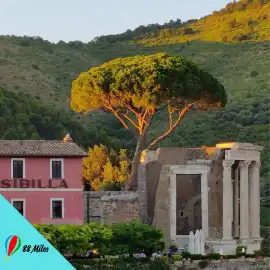
Calabria: Where the Sea Embraces the Mountain
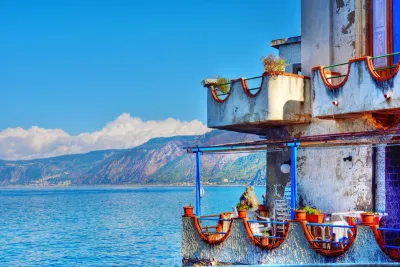
Calabria is the tip of the Italian boot, a region that surprises with the variety of its landscapes: over 800 km of coastline bathed by two seas, mountains exceeding 2,000 meters, medieval hilltop villages, testimonies of Magna Graecia and millennial traditions. Too often underestimated, Calabria is winning over travelers seeking authenticity, natural beauty and excellent value for money.
Coast of the Gods and Tropea
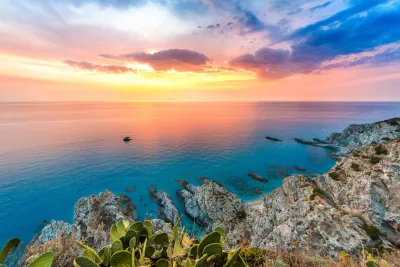
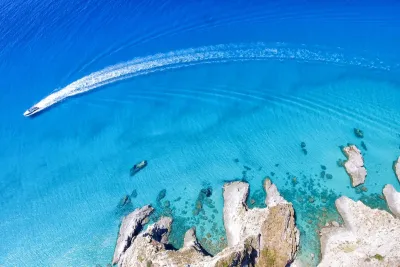
The Coast of the Gods is the most famous stretch of the Tyrrhenian Calabrian coast, from Pizzo Calabro to Nicotera. Its jewel is Tropea, known as the "Pearl of the Tyrrhenian": a village overlooking cliffs plunging into turquoise sea, with the Sanctuary of Santa Maria dell'Isola perched on a rock that seems to float.
Tropea's beaches – Spiaggia del Cannone, Spiaggia della Rotonda – have white sand and crystal-clear waters. Boat excursions allow you to explore sea caves, hidden coves like the Cave of Palombo, and snorkel among submerged rocky walls.
Capo Vaticano offers unforgettable sunsets and some of Italy's most beautiful beaches: Grotticelle, Praia i Focu, Baia di Riaci. From here depart excursions to the Aeolian Islands (Stromboli, Vulcano, Lipari) easily reachable in a day.
Riviera dei Cedri and Diamante
The Riviera dei Cedri on the northern Tyrrhenian coast owes its name to the cultivation of citron, a citrus fruit symbol of Jewish tradition. Diamante is famous for its murals decorating the old town facades (over 200 works) and for the Chili Pepper Festival, which attracts thousands of visitors every September.
The beaches of Praia a Mare, with the Island of Dino and its sea caves visitable by boat, Scalea with its ancient village, and San Nicola Arcella with the Arco Magno (a spectacular natural cave with internal beach) are unmissable destinations.
Ionian Coast: Caribbean Beaches
The Calabrian Ionian coast amazes with beaches that have nothing to envy of the Caribbean. Ionian Tropea (to distinguish it from the Tyrrhenian namesake) includes locations like:
- Soverato: the "Pearl of the Ionian" with lively seafront and equipped beaches
- Copanello: crystal-clear sea and seabeds perfect for diving
- Caminia and Pietragrande: coves set between cliffs
- Capo Rizzuto: Protected Marine Area with rich seabeds
- Le Castelle: medieval village with Aragonese castle on an islet connected to the mainland
The Archaeological Park of Capo Colonna preserves the only surviving column of the Temple of Hera Lacinia, one of the most important sanctuaries of Magna Graecia.
Locride and Gerace
Locride preserves hidden treasures: Gerace, one of Italy's most beautiful villages, perched on a rocky spur 500 meters above sea level, with Calabria's largest Norman cathedral and a perfectly preserved medieval old town.
The Archaeological Park of Locri Epizefiri testifies to the importance of this Magna Graecia colony, with temples, theater and archaeological museum.
Reggio Calabria and the Riace Bronzes
Reggio Calabria, city of the Strait, hosts the National Archaeological Museum where the famous Riace Bronzes are preserved: two bronze statues of Greek warriors from the 5th century BC, among the most important works of classical Greek art.
The Falcomatà promenade, defined by Gabriele D'Annunzio as "the most beautiful kilometer in Italy," offers a walk with views of Sicily and Mount Etna.
Sila National Park
Sila is a mountain plateau called "Italy's Great Forest": over 150,000 hectares of forests of larch pines, beech and white firs, emerald-colored artificial lakes, pastures where wolves, wild boars and the rare black woodpecker still live.
In summer you can go hiking on park trails, mountain biking, horseback riding, canoeing on Cecita, Arvo and Ampollino lakes, and visit Sila villages like Camigliatello Silano and San Giovanni in Fiore with its monumental Florense Abbey.
In winter Sila becomes a ski destination with slopes at Camigliatello, Lorica and Villaggio Mancuso, and routes for cross-country skiing and snowshoeing through snowy woods.
Pollino National Park
The Calabrian part of Pollino National Park offers spectacular landscapes, from Monte Pollino (2,248 m) to the Raganello Gorges, one of Europe's most impressive canyons.
Rafting and canyoneering in the gorges, trekking among millennial Loricato Pines, paragliding from Pollino summit with views of two seas, and e-bike excursions attract outdoor enthusiasts from all over Europe.
Aspromonte: Between Sea and Mountain
Aspromonte National Park is Italy's southernmost mountain, where in a few kilometers you go from crystal-clear sea to peaks of almost 2,000 meters. The waterfalls – Maesano, Mundu, Galasia – are spectacular and reachable with hikes between fiumare and lush woods.
Pentedattilo, ghost village under the "Five Stone Fingers," is one of Calabria's most evocative places, perfect for photography tours at sunset.
The Amendolea fiumara and the English Trail offer excursions into Aspromonte's wildest nature.
Villages of Grecanic and Arbëreshë Areas
The Bovesia or Grecanic Area preserves nine municipalities where Calabrian Greek (Grecanico), a language derived from ancient Greek, is still spoken. Bova, Gallicianò, Roghudi preserve millennial traditions, architecture and culture.
Calabria also hosts Arbëreshë communities (Italian-Albanians): Civita, Frascineto, Lungro keep alive the Albanian language, traditional costumes and Byzantine rite. Cultural tours allow you to discover these linguistic minorities unique in Europe.
Cosenza and Crati Valley
Cosenza, city of the Bruttii, has a fascinating old town with the UNESCO Cathedral, the Swabian Castle and the Museum of the Brettii and Enotri. The modern Open-air Bilotti Museum (MAB) on Corso Mazzini exhibits works by De Chirico, Dalí, Mimmo Rotella.
The Crati Valley with its vineyards produces excellent DOC wines, while the surrounding hills host villages like Altomonte and Morano Calabro, among Italy's most beautiful.
Food and Wine: Strong and Passionate Flavors
Calabrian cuisine is characterized by bold flavors and unique products:
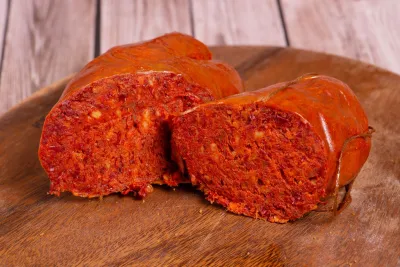
- 'Nduja di Spilinga: very spicy spreadable salami, now famous worldwide
- Tropea Red Onion IGP: sweet and crunchy, perfect raw in salads
- Reggio Calabria Bergamot DOP: very rare citrus used in perfumery and cooking
- Monte Poro Pecorino and Caciocavallo Silano DOP
- Swordfish and bluefin tuna from the Strait
- Calabria Licorice DOP: Rossano is the world capital of licorice
Wines include Cirò DOC (one of Italy's oldest), Greco di Bianco, extraordinary dessert wine, and Gaglioppo, native grape variety.
Cooking classes in agritourisms teach you to prepare fileja (fresh Calabrian pasta) with pork sauce, sardines a beccafico, pitta 'mpigliata (Christmas sweet), and cuzzupa (Easter sweet).
Traditions and Festivals
Calabria lives with popular festivals and ancestral rites: the Varia di Palmi (UNESCO heritage votive machine), the Giants of Palmi, the Feast of Madonna della Consolazione in Reggio, Holy Week in Morano Calabro with evocative processions.
Craftsmanship and Traditions
Among Calabrian artisan traditions: the processing of Seminara and Squillace ceramics, weaving of Tiriolo carpets, construction of pipite (terracotta whistles), production of wicker baskets.
When to Visit Calabria
Calabria offers experiences year-round: summer for beaches (June to September), spring and autumn for hiking, food and wine tours and mild temperatures, winter for skiing in Sila and intimate atmospheres in villages.
How to Get Around
Calabria has three airports: Lamezia Terme (main), Reggio Calabria and Crotone. Car rental is recommended to freely explore coasts and mountains. NCC services offer convenient transfers, while organized tours with guide allow you to discover hidden villages, parks and archaeological areas.
Discover Calabria with Expitalia: select the experiences you want to live and build your tailor-made trip in the region of two seas. Dream beaches, wild mountains, intense flavors and millennial traditions await you.

 Italiano
 English