Lombardy: Where Tradition Meets Innovation
Lombardy is Italy's economic engine but also a region extremely rich in history, art, nature and traditions. From Milan's skyscrapers to Valtellina's alpine peaks, from lakes' historic villas to UNESCO art cities, from Franciacorta vineyards to Pavia rice fields, Lombardy offers extraordinary variety of experiences in a relatively compact and perfectly connected territory.
Milan: Capital of Fashion, Design and Culture
Milan is Italy's economic and financial capital, but above all a dynamic, cosmopolitan city that combines tradition and innovation.
Monumental Milan
Cultural tours include:
- Milan Cathedral: world's third-largest Catholic church, Gothic masterpiece with 3,400 statues, spires, Terraces (accessible) offer 360° views of Milan and the Alps
- Galleria Vittorio Emanuele II: "Milan's salon," 19th-century shopping gallery covered by glass and iron vault, mosaic floor with Bull (tradition wants you to spin on one heel for good luck)
- La Scala Theater: world opera temple, with visitable theater museum
- Sforza Castle: Sforza dukes' residence, today museum with works by Michelangelo (Rondanini Pietà), Leonardo, Mantegna
- Cenacolo Vinciano (Santa Maria delle Grazie): Leonardo da Vinci's Last Supper, absolute Renaissance masterpiece (booking mandatory months in advance)
- Pinacoteca di Brera: one of Italy's most important art galleries (Raphael, Caravaggio, Hayez)
- Basilica of Sant'Ambrogio: Romanesque church, Milan's spiritual heart
- Church of San Maurizio al Monastero Maggiore: called "Milan's Sistine Chapel" for 16th-century frescoes
Modern and Contemporary Milan
- Porta Nuova District: modern skyline with Vertical Forest (residential towers with trees), Piazza Gae Aulenti
- CityLife District: with three towers (Hadid, Isozaki, Libeskind)
- Fondazione Prada: contemporary cultural hub designed by Rem Koolhaas
- Hangar Bicocca: contemporary art exhibition space
- Navigli: bohemian district with canals designed by Leonardo da Vinci, clubs, restaurants, vintage markets (last Sunday of month)
Milan Fashion and Design
- Fashion Quadrilateral: Via Montenapoleone, Spiga, Sant'Andrea, Verri with major fashion houses' boutiques
- Fuorisalone (April): design week during Salone del Mobile, with installations throughout the city
- Fashion Week: February-March and September, fashion shows and events
Gastronomic Milan
Food tours discover Milanese-Lombard tradition:
- Risotto alla milanese (with saffron and marrow)
- Ossobuco with gremolada
- Cotoletta alla milanese: veal, with bone, breaded and fried
- Cassoeula: winter dish with cabbage and pork
- Panettone: Milanese Christmas sweet par excellence
- Milanese aperitivo: happy hour tradition with buffet
Lake Como: Elegance and Dreamlike Landscapes
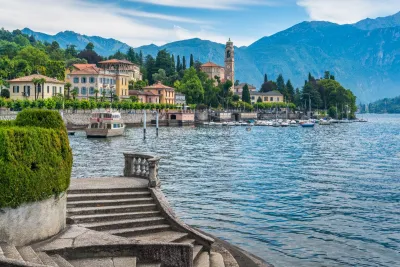
Lake Como (Lario) is Italy's third-largest lake but first for charm: surrounded by mountains, with historic villas, romantic villages, Belle Époque atmospheres.
Como: city on lake's southwest tip, with Gothic-Renaissance Cathedral, Funicular to Brunate (lake views), old town with medieval walls, silk production (Como is world silk capital).
Bellagio: "pearl of Lario," village at lake center where two branches divide, with Villa Melzi, Villa Serbelloni (visitable gardens), characteristic alleys, elegant atmosphere.
Varenna: romantic village with Villa Monastero (botanical gardens on lake), Vezio castle, panoramic walks.
Menaggio: resort with lakefront, golf club, departure for mountain excursions.
Tremezzina: coast with most beautiful villas: Villa Carlotta (botanical garden with azaleas, rhododendrons, museum with Canova sculptures), Villa Balbianello (film location like Star Wars and 007, gardens overlooking lake).
Boat excursions connect all villages and allow admiring historic villas, mountains, romantic scenery. Navigation service is efficient and panoramic.
Wayfarer's Path: multi-day trek along lake's eastern shore, from Abbadia Lariana to Colico.
Lake Garda: The Mediterranean of the North
Lake Garda is Italy's largest lake, divided between Lombardy (west shore), Veneto (east), Trentino (north). Lombard part offers:
Sirmione: peninsula with Grottoes of Catullus (Roman villa), Scaliger Castle (medieval castle on lake), thermal center, romantic pedestrian old town.
Desenzano del Garda: lively resort with lakefront, tourist port, old town, Roman Villa with mosaics.
Salò: elegant town with Garda's longest lakefront, Renaissance cathedral, history (was capital of Italian Social Republic 1943-45).
Gardone Riviera: Vittoriale degli Italiani, Gabriele D'Annunzio's residence-monument, unique complex with villa, gardens, amphitheater, military ship.
Limone sul Garda: picturesque village with terraced lemon houses, crystal-clear waters.
Tremosine: plateau above lake with Brivido Terrace at Pieve, vertiginous Garda panorama.
Water sports: windsurfing, kitesurfing, sailing (Pelér and Ora winds), SUP.
Cycling: Garda by bike, panoramic cycle paths.
Lake Maggiore: Villas and Islands
Lake Maggiore (Verbano) is divided between Lombardy (east shore), Piedmont (west), Switzerland (north).
Borromean Islands: lake jewels, reachable by boat:
- Isola Bella: Baroque Borromeo Palace with terraced Italian gardens, shell-decorated caves
- Isola Madre: largest, with villa and exotic botanical garden (white peacocks, pheasants)
- Isola dei Pescatori (Isola Superiore): authentic fishing village, typical restaurants
Stresa: elegant Belle Époque resort, lakefront, Mottarone cable car (1,491 m) for panoramic views of lake and Alps, boat departure for islands.
Angera: with Rocca di Angera, Borromeo medieval castle with Doll Museum.
Bergamo: Upper City and Lower City
Bergamo divides into two souls:
Upper City: UNESCO heritage medieval village, enclosed by Venetian walls (UNESCO heritage), reachable by funicular. Includes:
- Piazza Vecchia: considered one of Italy's most beautiful, with Palazzo della Ragione, Civic Tower (Campanone)
- Basilica of Santa Maria Maggiore: Romanesque, Baroque interior with tapestries, wooden inlays
- Colleoni Chapel: Renaissance masterpiece with polychrome facade
- Visconti citadel: fortification with museum
- Via Colleoni: main street with historic shops
Lower City: modern and vital, with Via XX Settembre (shopping street), Accademia Carrara (picture gallery with Botticelli, Bellini, Raphael, Mantegna), GAMeC (modern and contemporary art).
Bergamo cuisine: polenta and osei (small birds), casoncelli (stuffed ravioli), polenta taragna, stracciatella (creamy cheese invented here).
Brescia and Franciacorta
Brescia, "Lioness of Italy," preserves Archaeological Park of Roman Brescia (UNESCO heritage): Capitolium, Roman Theater, Forum. Castle dominates city, Museum of Santa Giulia (UNESCO heritage) is extraordinary for Lombard and medieval collections.
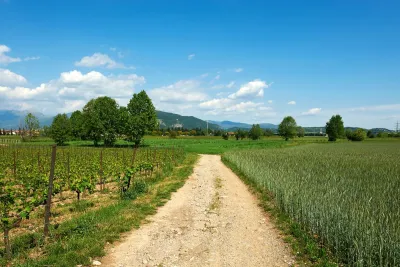
Franciacorta is the region of Italy's most prestigious DOCG sparkling wine classic method, produced in moraine hills between Brescia and Lake Iseo.
Food and wine tours include visits to historic wineries (Berlucchi, Ca' del Bosco, Bellavista, Ferghettina) with Franciacorta tastings (Satèn, Rosé, Millesimato), gourmet pairings, lunches in farmhouses with Brescia cuisine.
Lake Iseo with Monte Isola: Europe's largest inhabited lake island (reachable by ferry), without cars, with fishing villages, sanctuaries, panoramas.
Mantua: City of Gonzagas
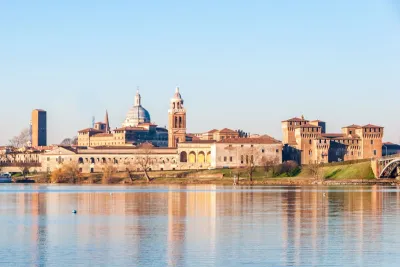
Mantua, UNESCO heritage, was capital of Gonzaga Duchy. Surrounded by three lakes formed by Mincio river, preserves:
- Ducal Palace: over 500 rooms, with Camera degli Sposi frescoed by Mantegna
- Palazzo Te: suburban villa with mannerist frescoes (Giants' Hall by Giulio Romano)
- Basilica of Sant'Andrea: Renaissance masterpiece by Leon Battista Alberti
- Bibiena Theater: 18th-century jewel where young Mozart played
- Piazza delle Erbe: medieval heart with Palazzo della Ragione, Clock Tower, Rotonda of San Lorenzo
Mantuan cuisine: pumpkin tortelli, risotto alla pilota, sbrisolona (crumbly cake).
Cremona: City of Violin Makers
Cremona is homeland of Stradivari, Amati, Guarneri: history's greatest violin makers. Violin Museum preserves historic instruments and violin-making tradition (UNESCO immaterial heritage).
Torrazzo (112 meters) is Italy's highest brick medieval bell tower, with astronomical clock.
Cremona specialty: torrone, invented here in 1441 for wedding of Bianca Maria Visconti and Francesco Sforza.
Pavia: University and Certosa
Pavia, ancient Lombard capital, hosts one of Europe's oldest universities (1361). Old town preserves medieval towers, Cathedral, Visconti Castle, Covered Bridge on Ticino.
Certosa di Pavia, 8 km from city, is Renaissance masterpiece: Carthusian monastery with richly decorated facade, cloisters, visitable monks' cells.
Monza: Royal Villa and Racetrack
Monza preserves Royal Villa with Park (one of Europe's largest enclosed parks), Napoleon and Savoy residence. Inside it the Monza Racetrack, speed temple, hosts Italian Formula 1 Grand Prix.
Cathedral preserves Iron Crown (used to crown kings of Italy and Holy Roman Empire emperors).
Valtellina: Alpine Valley and Heroic Wines
Valtellina is a long alpine valley carved by Adda river, surrounded by Rhaetian Alps.
Sondrio: capital with old town, Valtellina museum, base for excursions.
Terraced vineyards of Valtellina are among Europe's most heroic: cultivated on very steep slopes between 300 and 700 meters altitude. DOCG wines Valtellina Superiore and Sforzato (from dried Nebbiolo grapes) are Italian excellences.
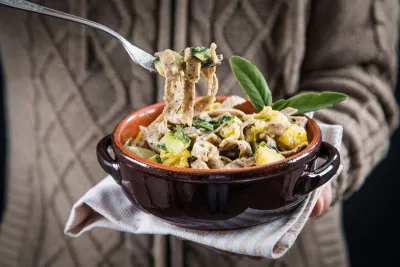
Food and wine tours include wineries, tastings, pizzoccheri (buckwheat pasta with cabbage, potatoes, cheeses), sciatt (buckwheat fritters filled with cheese), Valtellina bresaola IGP.
Bormio: thermal and ski resort with Bagni Vecchi and Bagni Nuovi (QC Terme), medieval old town, departure for Stelvio Pass (2,758 m, Italy's highest paved road with 48 hairpins).
Livigno: duty-free zone at high altitude (1,816 m), shopping paradise, skiing, mountain biking.
Stelvio National Park: Italy's largest alpine park (Lombard side), with ibex, chamois, eagles, trails among glaciers and peaks over 3,000 meters.
Food and Wine: Different Regional Traditions
First courses:
- Risotto alla milanese (saffron)
- Pizzoccheri from Valtellina
- Casoncelli from Bergamo
- Pumpkin tortelli from Mantua
Second courses:
- Cotoletta alla milanese
- Ossobuco
- Bresaola from Valtellina
- Missoltini (dried agoni from lake)
Cheeses:
- Gorgonzola DOP
- Taleggio DOP
- Grana Padano DOP
- Bitto from Valtellina
- Quartirolo Lombardo DOP
Desserts:
- Panettone from Milan
- Sbrisolona from Mantua
- Torrone from Cremona
- Amaretti from Saronno
Wines: Franciacorta DOCG, Valtellina Superiore DOCG, Sforzato DOCG, Oltrepò Pavese DOC, Lugana DOC (Garda).
When to Visit Lombardy
Lombardy is ideal year-round: spring for flowering lakes, cities; summer for mountains, lakes, water sports; autumn for foliage, grape harvest, mushrooms; winter for skiing in Valtellina, less crowded cities, panettone.
How to Get Around
Airports: Milan Malpensa (intercontinental), Milan Linate (national/European), Bergamo Orio al Serio (low-cost).
Trains: capillary network, Milan main hub. High speed connects Milan to Rome, Florence, Venice, Turin.
Subways: Milan (M1, M2, M3, M4, M5), Brescia.
Lake navigation: efficient ferry and boat services on Como, Garda, Maggiore, Iseo.
Car: highways A4 (Milan-Venice), A1 (Milan-Bologna), ring roads. Car rental recommended for lakes, valleys, villages. Organized tours ideal for Franciacorta wineries, lake villas, food and wine experiences.
Discover Lombardy with Expitalia: select the experiences you want to live and build your tailor-made trip in the region of great lakes, art cities and Alps. Milan, Como, Franciacorta, Valtellina and UNESCO treasures await you.

 Italiano
 English