Marche: Italy in One Region
Marche are often defined as "Italy in one region" for the extraordinary variety of landscapes, artistic treasures, traditions they contain in a relatively small territory. From Adriatic beaches to Sibillini Apennine peaks, from Renaissance cities to perfectly preserved medieval villages, from underground caves to Franciscan sanctuaries, this gentle land offers authenticity, beauty and a human-scale pace of life.
Urbino: Renaissance Capital
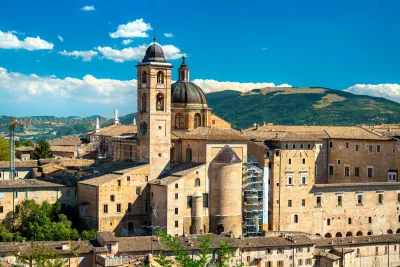
Urbino is UNESCO heritage, birthplace of Raphael Sanzio and one of Italian Renaissance centers. Palazzo Ducale by Federico da Montefeltro is an architectural masterpiece preserving the National Gallery of Marche with works by Piero della Francesca (Flagellation of Christ, Madonna of Senigallia), Raphael, Paolo Uccello, Titian.
Old town preserves intact Renaissance urban fabric: Raphael's Birthplace (with youthful frescoes by the master), Cathedral, Oratory of San Giovanni Battista with 14th-century frescoes, University (one of Europe's oldest, founded 1506).
Medieval streets, squares, noble palaces offer time-suspended atmospheres. Sanzio Theater and panoramas from walls over Marche countryside complete the experience.
Ancona and Conero Riviera
Ancona, regional capital, is a port city with maritime identity. Cathedral of San Ciriaco dominates port from high Guasco hill (promontory jutting into sea), Romanesque masterpiece with Byzantine influences. Trajan's Arch, Vanvitelli Lazaretto pentagonal, National Archaeological Museum of Marche testify to city's millennial history.
Passetto with urban beach, typical Ancona floating baths (caves transformed into establishments), panoramic War Memorial are symbolic places.
Conero Riviera is among Adriatic's most beautiful coasts: Monte Conero (572 m) plunges into sea creating cliffs, hidden coves, white pebble beaches and crystal-clear waters.
Sirolo and Numana: perched villages with beaches accessible on foot or by sea:
- Due Sorelle Beach: most iconic, with two white stacks (reachable only by boat)
- San Michele Beach: surrounded by Mediterranean vegetation
- Sassi Neri Beach: dark volcanic pebbles
- Urbani Beach: Sirolo's main
Conero Park offers panoramic hiking among Mediterranean scrub, holm oak woods, breathtaking sea views. Friars' Path connects Capuchin Convent to Sirolo.
Boat excursions circumnavigate promontory touching sea caves, coves, stacks.
Pesaro: Rossini's City
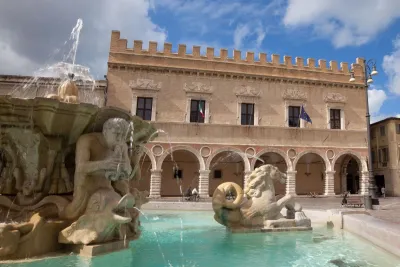
Pesaro is birthplace of Gioacchino Rossini: National Rossini Museum (Casa Rossini), Rossini Theater, Rossini Opera Festival (August) celebrate the composer.
Old town with Piazza del Popolo, Ducal Palace, Civic Museums (with Casteldurante ceramics and works by Giovanni Bellini) deserve a visit.
Wide sandy beaches, seafront, cycle paths make Pesaro an equipped and livable seaside resort.
Villa Imperiale: Renaissance residence on San Bartolo hill, visitable by reservation.
Gradara: Paolo and Francesca's Castle
Gradara is one of Italy's most beautiful and visited medieval villages: Castle (well-preserved with walkways, frescoed halls, courtyards) was theater of tragic love of Paolo and Francesca sung by Dante in Inferno.
Walled village with walkable castle walls (double medieval wall circle), patrol walkways, artisan shops, restaurants in ancient cellars create authentic medieval atmospheres.
Costumed events reenact Middle Ages: Siege of Castle (July), Christmas Castle (December).
Fano: Between Roman History and Sea
Fano preserves important Roman testimonies: Arch of Augustus (one of Italy's best-preserved Roman arches), Augustan walls, Fortune Theater.
Medieval old town with Piazza XX Settembre, Fountain of Fortune, Malatesta Palace is lively and authentic.
Fano Carnival is one of Italy's oldest (1347), with float parades and traditional candy throwing (getto).
Sandy beaches and seafront make Fano a family-friendly seaside resort.
Senigallia: Velvet Beach and Rotonda sul Mare
Senigallia is famous for Velvet Beach: very fine sand, shallow seabed, perfect for families.
Rotonda a Mare: liberty iron and wood platform jutting into sea, city symbol, hosts events and is panoramic viewpoint.
Old town preserves Rocca Roveresca (15th-century fortress visitable), Foro Annonario (neoclassical covered market with circular colonnade), noble palaces.
Summer Jamboree (July) is international 1950s music and culture festival attracting enthusiasts worldwide.
Macerata: City of Opera
Macerata is hillside art city with Palazzo Buonaccorsi (civic museum with historic carriages and picture gallery), Basilica of Mercy, Civic Tower, elegant old town.
Sferisterio is monumental neoclassical arena built for bracelet ball game, today seat of Macerata Opera Festival (July-August) with operas in spectacular settings.
Loreto: Marian Sanctuary
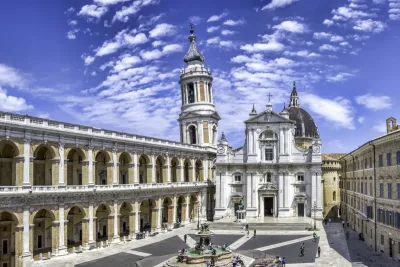
Loreto hosts one of Christianity's most important Marian sanctuaries: Basilica of the Holy House, preserving Nazareth Holy House (according to tradition, house where Mary lived, miraculously transported by angels in 1294).
Sanctuary is pilgrimage destination from all over Europe, with Renaissance architecture (Bramante's project, Sansovino's facade, Vanvitelli's dome), frescoes, artworks.
Recanati, a few km away, is Giacomo Leopardi's city: Leopardi House with paternal library, Saturday Village Square, Infinity Hill where poet composed homonymous poem are evocative places for literary tour.
Ascoli Piceno: City of Hundred Towers
Ascoli Piceno is extraordinary art city, with Piazza del Popolo considered one of Italy's most beautiful: paved in travertine, surrounded by Renaissance porticos, with Caffè Meletti (historic liberty café).
Baptistery of San Giovanni: Romanesque architecture with white and gray squared facade.
Cathedral of Sant'Emidio: frescoed crypt, Carlo Crivelli polyptych.
Roman Bridge of Solestà: crosses Tronto torrent, ancient city access.
Medieval towers (about 50 remain of original 200) characterize skyline.
Quintana: medieval historical reenactment with equestrian joust (first Sunday of August).
Ascoli olives: stuffed, breaded, fried, are city gastronomic symbol. Ascoli fried mixed complete dish (cremini, artichokes, zucchini, flowers, all fried).
Fabriano: City of Paper and Watermark
Fabriano is famous for paper production of highest quality since 13th century: Paper and Watermark Museum tells this artisan tradition with live handmade processing demonstrations.
Civic Picture Gallery preserves works by Gentile da Fabriano (international Gothic painter).
Medieval old town with Piazza del Comune, Palazzo del Podestà, San Francesco Loggia is elegant and collected.
Frasassi Caves: Underground Cathedral
Frasassi Caves are karst complex among Europe's most spectacular: over 30 km of underground galleries with stalactites, stalagmites, concretions of incredible shapes.
Grotta Grande del Vento is main environment of tourist tour: immense cavern that could contain Milan Cathedral. Formations like Giants, Niagara Falls, Damocles' Swords leave you breathless.
Guided tour lasts about 75 minutes, with constant temperature of 14°C (bring sweatshirt). Speleological tours are available to explore non-tourist areas.
Nearby, Abbey of San Vittore alle Chiavi (11th century) and Valadier Temple: neoclassical octagonal church set in natural cave, reachable on foot.
Sibillini Mountains: Wild Nature
Sibillini Mountains National Park is paradise for nature and outdoor lovers, divided between Marche and Umbria.
Monte Vettore (2,476 m): highest peak, with Lake Pilate (glasses-shaped glacial lake, habitat of Chirocephalus Marchesoni, endemic crustacean).
Castelluccio Plains: plateau at 1,500 meters famous for lentil flowering (late May-early July), when fields color red, yellow, purple creating fairytale landscapes. Castelluccio Lentil IGP is gastronomic excellence.
Infernaccio Gorges and San Leonardo Hermitage: natural canyon with waterfalls, torrents, hermits.
Hiking: hundreds of trails, from easy to difficult, among beeches, high-altitude grasslands, peaks over 2,000 meters.
Cross-country skiing and snowshoeing in winter on Ragnolo and Castelluccio Plains.
Other Marche Villages
Corinaldo: perfectly preserved walled village, with Polenta Well (108-step staircase), homeland of Santa Maria Goretti, Halloween in Corinaldo (October).
Offida: village with bobbin lace (artisan tradition), medieval old town, Vlurd Carnival with traditional masks.
Cingoli: "Balcony of Marche" for panorama spanning from Adriatic to Apennines, Cingoli Lake.
Sant'Elpidio a Mare: village with Footwear Museum (Marche are world leader in quality shoe production).
Camerino: university town with Varano Fortress, university founded 1336.
San Benedetto del Tronto: seaside resort with tree-lined seafront, fishing port, Palme Riviera (8,000 palms on seafront).
Food and Wine: Land and Sea Flavors
First courses:
- Vincisgrassi: Marche lasagne with ragù, giblets, béchamel
- Passatelli in brodo: egg pasta grated with parmesan
- Potato gnocchi with duck sauce
Second courses:
- Ascoli-style olives: meat-stuffed, breaded, fried
- Fish brodetto: Adriatic fish soup (each port has its version)
- Rabbit in porchetta: with wild fennel
- Ciauscolo IGP: soft spreadable salami typical of Sibillini
Cheeses:
- Sibillini Pecorino
- Casciotta d'Urbino DOP: mixed sheep-cow cheese
Desserts:
- Ciambellotto: typical Marche donut
- Frustingo: Christmas sweet with dried figs, walnuts, honey
- Bostrengo: sweet with rice, apples, raisins
Wines:
- Verdicchio dei Castelli di Jesi DOC and Verdicchio di Matelica DOC: elegant whites, among Italy's best
- Rosso Conero DOC: from Montepulciano grapes
- Lacrima di Morro d'Alba DOC: aromatic red
- Pecorino: native white grape (not the cheese!)
Truffles: Acqualagna is capital of precious white truffle (National Truffle Fair in October-November).
Marche produce excellences like moscioli (wild mussels from Conero, Slow Food presidium), honey, Castelluccio lentils IGP, spelt.
Traditions and Craftsmanship
Marche are famous for craftsmanship: footwear (Fermo-Macerata district produces luxury shoes for major brands), accordions (Castelfidardo is world accordion capital), artistic ceramics, bobbin lace (Offida).
When to Visit Marche
Marche are splendid year-round: spring for flowering villages, nature; summer for sea and festivals; June-July for Castelluccio Plains flowering; autumn for truffle, grape harvest, foliage; winter for villages, nativity scenes, intimate atmospheres.
How to Get Around
Ancona-Falconara Airport (Raffaello Sanzio) is main regional hub.
Trains: Adriatic line connects all coastal cities. Car rental is recommended for inland villages, Sibillini, hilly territories. Organized tours are ideal for wineries, oil mills, villages, caves, food and wine experiences.
Ancona-Rome Expressway (SS76) crosses inland connecting Ancona to Fabriano and Umbria.
Discover Marche with Expitalia: select the experiences you want to live and build your tailor-made trip in the region of infinite villages. Conero Riviera, Renaissance Urbino, Frasassi Caves, Sibillini Mountains and authentic flavors await you.

 Italiano
 English