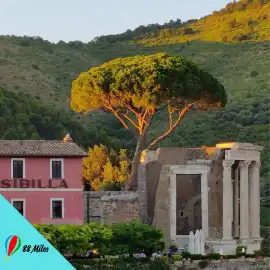
Umbria: Italy's Green and Spiritual Heart
Umbria is the only region of peninsular Italy without sea access, but compensates with gentle hills covered with olive groves and vineyards, perfectly preserved medieval villages, basilicas housing Italian art masterpieces, Franciscan traditions permeating every stone. Land of saints (Saint Francis, Saint Clare, Saint Benedict), mystics, artists (Perugino, Pinturicchio), Umbria offers peaceful atmosphere, authenticity, spirituality making it unique. Italy's "green heart" is refuge for those seeking beauty, silence, genuine flavors.
Assisi: City of Saint Francis
Assisi is UNESCO heritage and pilgrimage destination from worldwide: here Saint Francis (1182) and Saint Clare were born, here the saint renounced everything to live in poverty and love for creation.
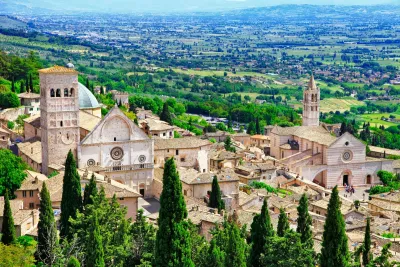
Basilica of Saint Francis: Italian Gothic art masterpiece, built on two levels after saint's death (1228-1253).
Lower Basilica: crypt with Saint Francis' tomb (simple, bare), frescoes by Giotto (Stories of Saint Francis), Cimabue (Enthroned Madonna), Simone Martini (Stories of Saint Martin), Pietro Lorenzetti. Collected, mystical atmosphere, half-light inviting contemplation.
Upper Basilica: bright, soaring, with famous Giotto fresco cycle (28 scenes of Saint Francis Stories), marking Italian painting revolution toward naturalism. Iconic facade with rose window and portals.
Basilica of Saint Clare: Gothic church with pink and white striped facade, houses Saint Clare's body and San Damiano Crucifix (cross that according to tradition spoke to Francis).
Rocca Maggiore: medieval fortress dominating Assisi from high, with walkways, towers, panoramic view over Umbrian hills and Valle Umbra.
Hermitage of Carceri: Franciscan hermitage in Monte Subasio woods (4 km from Assisi), place where Francis retreated in prayer, with natural caves, centuries-old holm oaks, absolute peaceful atmosphere. Hiking in Monte Subasio Park.
Medieval old town with pink Subasio stone alleys, Piazza del Comune with Roman Temple of Minerva (transformed into church), Palazzo del Capitano del Popolo, time-suspended atmospheres.
Perugia: Medieval Capital
Perugia, Umbrian capital, is university city (University for Foreigners founded 1921, University of Studies among Italy's oldest) with Etruscan medieval old town perched on hill.
Corso Vannucci: elegant main street with historic palaces, cafés (historic Caffè Sandri), shops, connecting Piazza Italia to Piazza IV Novembre.
Piazza IV Novembre: Perugia heart with:
- Fontana Maggiore (1278): Nicola and Giovanni Pisano masterpiece, with bas-reliefs depicting months, zodiac signs, biblical scenes, allegories
- Cathedral of San Lorenzo: Gothic, with Chapel of Holy Ring (relic: Madonna's wedding ring)
- Palazzo dei Priori (13th century): medieval town hall among Italy's most beautiful, with frescoed Sala dei Notari, Galleria Nazionale dell'Umbria (Perugino, Pinturicchio, Piero della Francesca, Beato Angelico)
Rocca Paolina: 16th-century fortress built by Pope Paul III incorporating Baglioni medieval quarter. Today walkable with underground escalators crossing medieval streets, arches, incorporated palaces (evocative experience).
Etruscan Arch (Arch of Augustus): 3rd-century BC Etruscan gate, among best preserved, with medieval tower above.
Collegio del Cambio: money changers' guild seat, with Perugino-frescoed Audience Hall (self-portrait), carved woods.
Eurochocolate (October): chocolate festival, Perugia is Perugina seat (Baci Perugina).
Orvieto: The Cathedral and Underground City
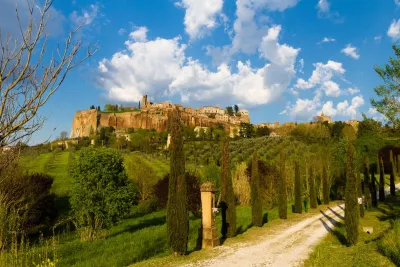
Orvieto is Etruscan village perched on tuff cliff (50 meters high), with Gothic cathedral among Italy's most beautiful.
Orvieto Cathedral (Cathedral of Santa Maria Assunta): Italian Gothic masterpiece (1290-1591), with:
- Facade: golden mosaics, bas-reliefs, rose window, spires, pinnacles (among world's most spectacular Gothic facades)
- Chapel of San Brizio: Last Judgment frescoes by Luca Signorelli (1499-1504), influencing Michelangelo for Sistine
- Corporale Chapel: houses Miracle of Bolsena corporale (1263, bleeding host), relic leading to Corpus Domini feast institution
Underground Orvieto: network of over 1,200 caves, tunnels, cisterns, wells, Etruscan columbaria carved in tuff under city (visitable with guided tours). St. Patrick's Well (1527): double-helix well (62 meters deep, 248 steps, two independent spiral staircases never meeting) to guarantee city water in siege.
Albornoz Fortress: papal fortification with public gardens, valley view.
Orvieto Classico DOC: Umbrian dry white wine, produced in surroundings (visitable wineries).
Gubbio: Stone City
Gubbio is perfectly preserved medieval village, called "stone city" for gray limestone Monte Ingino constructions.
Palazzo dei Consoli: monumental Gothic palace (14th century) on Piazza Grande (hanging square supported by arches), with Civic Museum housing Eugubine Tablets (VII-I century BC): seven bronze tablets with most important religious text in Umbrian language, written in Etruscan and Latin alphabet.
Basilica of Sant'Ubaldo: on Monte Ingino (827 m), reachable by cable car (in open cages, unique experience) or on foot. Houses Sant'Ubaldo's body, patron, and three Ceri (280 kg wooden obelisks) of Corsa dei Ceri.
Corsa dei Ceri (May 15): Gubbio identity feast among Italy's oldest (from 1160), three teams run carrying three Ceri (Sant'Ubaldo, San Giorgio, Sant'Antonio) from city to mountain basilica, 6pm start (not race, arrival order predetermined, Sant'Ubaldo first).
Roman Theater (1st century BC): well-preserved Roman amphitheater still used for summer shows.
Ducal Palace: Renaissance residence of Dukes of Urbino with courtyard, studiolo, Gubbio view.
Via Piccardi and Via dei Consoli: medieval streets with artisan shops (Gubbio ceramics), historic palaces.
Spoleto: City of Two Worlds
Spoleto is art city with Festival dei Due Mondi (June-July): international music, theater, dance, art festival founded by Gian Carlo Menotti (1958).
Spoleto Cathedral (Cathedral of Santa Maria Assunta): Romanesque facade with rose window and mosaics, Baroque interior, Pinturicchio-frescoed Relics Chapel, apse with Filippo Lippi frescoes (Stories of Virgin).
Ponte delle Torri: spectacular medieval aqueduct-bridge (13th-14th century) 80 meters high and 230 meters long, connecting city to Rocca Albornoziana crossing Tessino gorge (breathtaking view, walkable).
Rocca Albornoziana: papal fortress (14th century) on hill, with courtyards, museum, Spoleto and valley view.
Roman Theater (1st century AD): amphitheater still used for Festival shows.
Roman House: Roman domus with mosaic floors, frescoed rooms, impluvium.
Todi: Village of Balance
Todi is medieval village perched on hill, defined in 2006 "world's most livable city" by American university for balance between nature, art, quality of life.
Piazza del Popolo: one of Italy's most harmonious medieval squares, with:
- Romanesque-Gothic Cathedral with rose window facade, three-nave interior
- Palazzo del Popolo (1213): Gothic town hall with tower, civic museum
- Palazzo del Capitano and Palazzo dei Priori: medieval public palaces
Temple of Santa Maria della Consolazione: Renaissance church with central plan (1508-1607) outside walls, Bramante-attributed architectural masterpiece with dome and four polygonal apses (visitable panoramic loggia on Val d'Orcia).
Norcia: Saint Benedict's and Black Truffle Homeland
Norcia is walled village at Sibillini Mountains foot, birthplace of Benedict of Norcia (480), Western monasticism father.
City was severely damaged by 2016 earthquake; reconstruction ongoing but Norcia maintains identity.
Basilica of Saint Benedict: Gothic church (rebuilt after earthquake, restored Gothic facade), on saint's birthplace site. Crypt with Roman remains.
Castellina: 16th-century fortress in square center, civic museum seat.
Norcinerie: historic cured meat shops (Norcia is norcineria homeland, pig processing art). Norcia Ham IGP, artisan salami, sausages.
Black Truffle of Norcia: Valnerina precious black truffle, Norcia is truffle capital (exhibitions, restaurants, trade). Black Truffle Market Exhibition (February-March).
Castelluccio Plain: 1,400-meter plateau in Sibillini (15 km from Norcia), famous for flowering (late May-early July) when lentil, cornflower, poppy fields create spectacular multicolored carpets (post-earthquake accessible, reconstruction ongoing). Castelluccio Lentil IGP.
Marmore Waterfall: Italy's Highest Waterfall
Marmore Waterfall is artificial waterfall (created by Romans in 271 BC) Italy's highest: 165 meters drop over three jumps, with flow regulated by hydroelectric plant.
Visits: opening hours with water release (spectacular at full flow), panoramic trails (Lower Belvedere and Upper Belvedere), possibility to approach waterfall (prepare to get wet with nebulized water).
Sports: rafting, kayaking, hydrospeed on Nera river under waterfall (authorized guides).
Lake Trasimeno: Italy's Fourth Lake
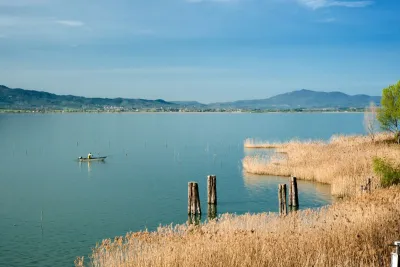
Lake Trasimeno is fourth Italian lake by size, central Italy's largest: shallow natural lake (max 6 meters), with three islands.
Isola Maggiore: inhabited island (about 15 residents), medieval fishing village, Church of San Michele Arcangelo (14th century), panoramic loop trail, Irish lace tradition. Reachable by ferry from Tuoro, Passignano, Castiglione del Lago.
Isola Polvese: largest, uninhabited, Nature Oasis, with ruined Olivetan Monastery, Aquatic Plants Garden, naturalistic trails. Visitable with organized tours.
Isola Minore: tiny, private, non-visitable.
Castiglione del Lago: medieval village on lake promontory, with Palazzo della Corgna (frescoes, panoramic loggia), medieval Rocca del Leone (walkable patrol walkway with lake view), old town with alleys, lake fish restaurants (carp, pike, eel, tench).
Passignano sul Trasimeno, Tuoro sul Trasimeno (site of 217 BC Trasimeno Battle, Hannibal vs Romans), Magione: lake villages.
Lake tour by car, bike (cycle path in some sections), on foot on naturalistic trails. Water sports: sailing, windsurfing, kayaking, SUP.
Bevagna and Montefalco: Wine Villages
Bevagna: perfectly preserved medieval village with Piazza Silvestri, one of Italy's most beautiful medieval squares (Romanesque Church of San Michele, Church of San Silvestro, Palazzo dei Consoli, fountain). Mercato delle Gaite (June): medieval reenactment with ancient crafts, taverns, costumes.
Montefalco: "Umbria's balcony" for panoramic position over Umbrian hills, produces Sagrantino di Montefalco DOCG (powerful red wine from native Sagrantino grapes). Visitable wineries with tastings. Church-Museum of San Francesco with Benozzo Gozzoli frescoes (Stories of Saint Francis), Perugino.
Spello: Flowered Village
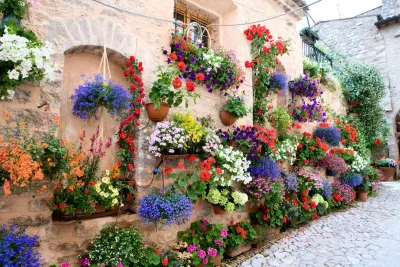
Spello is village at Monte Subasio foot, famous for flowered alleys (balconies, pots, flowers everywhere), Corpus Domini Infiorata (May-June): flower carpets covering center streets (among Italy's most beautiful infiorate).
Baglioni Chapel in Church of Santa Maria Maggiore: Pinturicchio frescoes (Annunciation, Nativity, Dispute in Temple).
Villa dei Mosaici: Roman villa with preserved polychrome mosaic floors.
Città di Castello: Upper Tiber Valley Capital
Città di Castello in Alta Valle Tiberina preserves Renaissance old town with Cathedral (Canoscio Treasure museum, early Christian silvers), Palazzo Vitelli a Sant'Egidio (municipal art gallery with Signorelli, Raphael, Ghirlandaio), Palazzo Albizzini (Burri Collection, Alberto Burri works).
Artisan typography printing tradition (Grifani-Donati Typography still active with historic presses).
Valnerina: Wild Valley
Valnerina is Nera river valley, wild, with gorges, woods, medieval villages, hermitages.
Abbey of San Pietro in Valle: Lombard abbey (8th century) frescoed, with Romanesque cloister, Lombard sarcophagi, today charming farmhouse.
Ferentillo: village divided by river, with Mummy Museum (naturally mummified bodies in Santo Stefano crypt due to particular microclimate).
Scheggino: medieval village on Nera, black truffle capital, rafting, kayaking.
Food and Wine: Genuine Land Flavors
Umbrian cuisine is peasant, genuine, linked to truffle, legumes, oil, wine:
First courses:
- Strangozzi (umbrichelli): thick fresh pasta similar to pici, with black truffle or aglione
- Strozzapreti (ciriole)
- Penne alla Norcina: with sausage, cream, black truffle (created in Norcia)
Second courses:
- Umbrian Porchetta: whole aromatic pork oven-cooked
- Pigeon ghiotta-style or roasted (Todi specialty)
- Torta al testo: focaccia cooked on testo (stone), filled with sausage, vegetables, cheese
Cured meats:
- Norcia Ham IGP
- Norcia Salami
- Umbrian Capocollo
- Mazzafegati: sweet sausages with raisins and pine nuts
Cheeses:
- Norcia Pecorino
- Raviggiolo: fresh cheese
Truffles:
- Black Truffle of Norcia and Spoleto: available almost year-round
- Precious white truffle: rare, autumn period
Legumes:
- Castelluccio Lentil IGP: small, flavorful, no soaking needed
- Trasimeno Fagiolina
- Cicerchia
Desserts:
- Torcolo of San Costanzo: Perugia donut with raisins, candied fruit, anise
- Rocciata: Umbrian strudel with apples, walnuts, raisins
- Brustengolo: corn flour, apple, raisin cake
- Pinoccate: pine nut and sugar sweets
Extra virgin olive oil: Umbria DOP (among Italy's best oils, delicate, fruity, from Moraiolo, Frantoio, Leccino cultivars).
Wines:
- Sagrantino di Montefalco DOCG: powerful, tannic red, from Sagrantino grapes (also passito)
- Montefalco Rosso DOC: blend with Sangiovese, Sagrantino
- Torgiano Rosso Riserva DOCG: from Lungarotti, historic Umbrian wine
- Orvieto Classico DOC: dry or abboccato white
- Grechetto, Trebbiano Spoletino: native whites
Paths and Spirituality
Umbria is crossed by spiritual paths:
Francis Way: from Assisi to Verna Sanctuary (Tuscany), 200 km among hermitages, sanctuaries, woods.
Benedict Way: from Norcia to Montecassino (Lazio), on saint's footsteps.
Via di Francesco: from Florence to Rome passing through Assisi.
Paths touch hermitages, abbeys, Franciscan and Benedictine places.
When to Visit Umbria
Umbria is splendid year-round: spring (April-May) for green hills, Castelluccio flowering, Spello Infiorata, Gubbio Corsa dei Ceri; summer for festivals (Spoleto, Umbria Jazz Perugia), cool hillside villages; autumn (September-October) for grape harvest, truffle, foliage, festivals; winter for collected atmospheres, nativity scenes, cities without mass tourism, black truffle.
How to Get Around
Perugia Airport (San Francesco d'Assisi, small, limited flights). Rome Fiumicino Airport (200 km), Florence (150 km).
Trains: Perugia, Assisi, Spoleto, Orvieto connected to national network. Central Umbrian Railway (Perugia-Terni, touristic, slow but panoramic).
Car: essential for villages, countryside, wineries, hermitages. Car rental recommended. Expressways: E45 (north-south), Perugia-Bettolle.
Organized tours: ideal for wineries, oil mills, medieval villages, Assisi with guide, cooking classes in farmhouses.
Discover Umbria with Expitalia: select experiences you want to live and build tailor-made trip in Italy's green heart. Franciscan Assisi, medieval villages, black truffle, sagrantino and authentic spirituality await you.

 Italiano
 English