Aosta Valley: The Roof of Europe
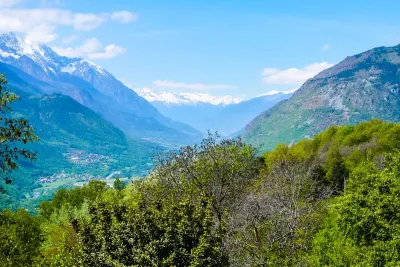
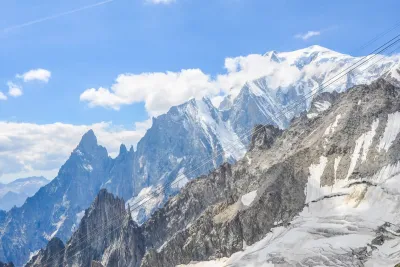
Aosta Valley is Italy's smallest and least populated region, but also most mountainous: 100% of territory is alpine. Here are the four highest Alpine peaks: Mont Blanc (4,810 m), Monte Rosa (4,634 m), Matterhorn (4,478 m), Gran Paradiso (4,061 m). Bilingual region (Italian-French) with German-speaking minorities (Walser), Aosta Valley unites Latin culture and French-Swiss influences, authentic alpine traditions, mountain architecture, mountain gastronomy. A paradise for skiers, mountaineers, hikers, wild nature lovers.
Aosta: The Rome of the Alps
Aosta, regional capital (34,000 inhabitants), is Roman city founded in 25 BC by Augustus (Augusta Praetoria), with extraordinary still-visible Roman testimonies.
Roman Monuments:
• Arch of Augustus: 25 BC Roman triumphal arch at city's east entrance, among Italy's best preserved
• Porta Praetoria: Roman urban gate with three arches, 11 meters high, imposing city entrance
• Roman Theater: theater remains with 22-meter-high facade (among best-preserved Roman theatrical facades)
• Roman Amphitheater: amphitheater remains incorporated in modern buildings
• Forense Criptoportico: semi-underground Roman underground gallery with barrel vaults (1st century BC), visitable
Medieval Monuments:
• Cathedral of Santa Maria Assunta: Romanesque-Gothic cathedral with neoclassical facade, interior with frescoes, crypt, treasury museum with sacred art
• Collegiate Church of Sant'Orso: Romanesque complex with bell tower, frescoed cloister with carved capitals (among Alps' most beautiful), crypt
Old town: medieval streets, squares, historic cafés, Aosta Valley crafts shops (wooden objects, wool, fontina, lard).
Courmayeur: At Mont Blanc's Feet
Courmayeur (1,224 m) is Aosta Valley's chicest resort, at Italian Mont Blanc slope foot (4,810 m, Europe's highest peak).
Skyway Monte Bianco: latest-generation rotating panoramic cable car rising in two sections from Courmayeur to Punta Helbronner (3,466 m), with breathtaking view over Mont Blanc, Grandes Jorasses, Dente del Gigante, Giant glacier. From Punta Helbronner departs cable car to Aiguille du Midi (France, Chamonix). Unique high-altitude experience, panoramic restaurant, 360° Crystal terrace.
Skiing: ski area with slopes on Italian Mont Blanc slope, connection with Val Veny and Val Ferret. Legendary off-piste for experts (Vallée Blanche from Punta Helbronner to Chamonix, with alpine guide).
Val Ferret and Val Veny: Courmayeur side valleys, summer hiking paradise, mountain biking, with glacier and peak views. Rifugio Bonatti, Rifugio Elisabetta bases for alpine excursions.
Courmayeur center: elegant, with pedestrian Via Roma (boutiques, mountain shops, jewelry), restaurants, refined après-ski, historic hotels.
Cervinia and the Matterhorn
Cervinia-Valtournenche (2,050 m) is ski resort at Matterhorn foot (Matterhorn, 4,478 m), Alps' most iconic mountain for its perfect pyramidal shape.
Cervinia-Zermatt international area: one of Europe's largest and highest, with slopes up to 3,883 m (Plateau Rosa, glacier), summer skiing, ski-to-feet connection with Zermatt (Switzerland, passport required). Over 350 km slopes between Italy and Switzerland, panoramas over Matterhorn, Monte Rosa, Mont Blanc.
Plateau Rosa Cable Car: rises to 3,480 m with close-up Matterhorn view.
Lago Blu (Valtournenche): 2,000 m alpine lake where Matterhorn reflects (one of Alps' most photographed spots). Reachable by car or easy excursion.
Mountaineering: Cervinia is base for Matterhorn mountaineering ascents (Italian route from Rifugio Duca degli Abruzzi), for expert mountaineers with guide.
Gran Paradiso National Park
Gran Paradiso National Park (1922, Italy's first national park) protects 71,000 hectares alpine territory between Aosta Valley and Piedmont, around Gran Paradiso massif (4,061 m, only peak over 4,000 meters entirely in Italy).
Fauna: ibex (park symbol, about 3,000 specimens), chamois, marmots, golden eagles, bearded vultures (reintroduced), ermines. Ibex easily approach in park valleys.
Aosta Valley park valleys:
• Valsavarenche: wild valley with Pont (visitor center), Rifugio Vittorio Emanuele II (2,732 m, base for Gran Paradiso ascent), ibex-spotting trails
• Valle di Cogne: most accessible valley, with Cogne (elegant alpine village), Valnontey (valley with easily-spotted ibex), Paradisia Alpine Botanical Garden (alpine flora), Lillaz waterfalls
Hiking: hundreds of trails all levels, CAI alpine refuges, High Route 2 crosses park.
Winter: cross-country skiing in Cogne (40 km among Italy's best trails), snowshoeing, ski mountaineering.
Castles of Aosta Valley
Aosta Valley has Europe's highest medieval castle concentration (over 70 among castles, fortifications, towers): valley was strategic road to alpine passes (Great Saint Bernard, Little Saint Bernard).
Fénis Castle: most scenic and visited, medieval castle (XIV-XV century) with double walls, cylindrical towers, externally frescoed courtyard staircase, frescoed halls with chivalric scenes. Perfect conservation state.
Issogne Castle: Renaissance residence with courtyard with Pomegranate Fountain (Challant family symbol), medieval daily life scene frescoes, period furnishings.
Fort of Bard: imposing military fortress (XIX century) on rocky spur blocking valley, Alps museum, Fortifications museum, temporary exhibitions, multimedia spaces. Ascent with panoramic elevators (free).
Verrès Castle: imposing medieval cubic donjon (XIV century), with monumental internal staircase.
Sarre Castle: Savoy residence (King Victor Emmanuel II used for hunting expeditions), museum, halls with chamois and ibex trophies.
Savoia Castle (Gressoney-Saint-Jean): summer residence of Queen Margherita of Savoy, eclectic architecture, English garden.
Ussel Castle (Châtillon): restored medieval manor, virtual museum.
Many castles are visitable (single ticket for multiple castle circuits).
Pila: Ski Area Near Aosta
Pila (1,800 m) is modern ski resort 18 km from Aosta, reachable by car or gondola from Aosta (18 minutes). Area with 70 km slopes, panoramic view over Mont Blanc, Matterhorn, Monte Rosa, Gran Paradiso (only area from which you see Alps' 4 highest peaks).
Spas and Wellness
Pré-Saint-Didier: historic spas at Mont Blanc foot, QC Terme with over 40 thermal pools (indoor/outdoor, panoramic Mont Blanc views), hot waterfalls, saunas, steam caves. Thermal water gushing at 37°C. Regenerating post-ski or hiking experience.
Saint-Vincent Thermal Baths: historic spa center with beneficial waters.
Saint-Vincent and Casino
Saint-Vincent is spa resort with Casino de la Vallée: Italy's largest casino, with gaming halls, restaurants, theater, events. Forum outlet shopping center.
Gressoney and Lys Valley: Walser Community
Gressoney-Saint-Jean and Gressoney-La-Trinité are Lys Valley villages (side valley) inhabited by Walser community (German-speaking population of Swiss origin arrived in XIII century). Titsch (Walser German dialect) spoken, architecture with Staldel (wooden Walser houses on stone pillars), traditional costumes, Walser museums.
Monterosa Ski: ski area with 180 km slopes connects Gressoney, Champoluc (Valle di Ayas), Alagna Valsesia (Piedmont), at Monte Rosa foot (4,634 m, Alps' second peak).
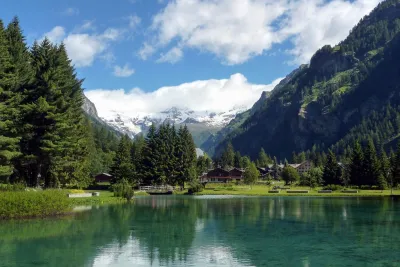
Hiking: alpine trails, refuges, Gabiet lake (2,340 m, turquoise alpine lake).
La Thuile and Little Saint Bernard Pass
La Thuile (1,450 m) is Valdigne ski resort (high valley), with international San Bernardo area ski-to-feet connected with La Rosière (France), 160 km slopes between Italy and France.
Little Saint Bernard Pass (2,188 m): alpine pass connecting Italy and France, alpine panoramas, Column of Jupiter (Roman remains), Chanousia Alpine Botanical Garden (closed winter), Cromlech (prehistoric megalithic circle). Closed in winter.
Great Saint Bernard Pass
Great Saint Bernard Pass (2,469 m) is historic alpine pass connecting Aosta Valley and Switzerland (Valais). Hospice of Great Saint Bernard: hospice founded in XI century by Saint Bernard of Menthon to assist travelers, today museum. Famous for Saint Bernard dogs (alpine rescue breed) bred here (kennel visitable in summer).
Arnad and Lard
Arnad is lower valley village famous for Arnad Lard DOP: pork lard aged in doil (chestnut or oak containers) with alpine aromatic herbs (rosemary, sage, bay leaf, garlic) for at least 3 months. Slow Food presidium product. Lard Festival (last Sunday August).
Heroic Wines: Mountain Viticulture
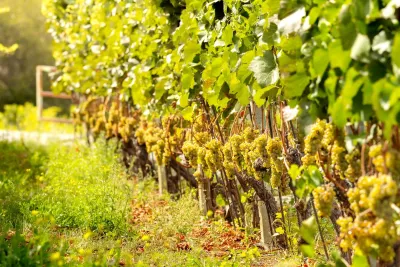
Aosta Valley produces mountain wines among Europe's highest (terraced vineyards up to 1,200 m): "heroic" viticulture on steep slopes, dry-stone walls, small artisan productions.
Valle d'Aosta DOC (single regional DOC):
• Blanc de Morgex et de La Salle: white from Prié Blanc grapes, Europe's highest vineyards (900-1,200 m), fresh, mineral, manual harvest
• Fumin: intense native red
• Petite Arvine: aromatic white of Swiss origin
• Torrette: red from Petit Rouge
• Nus Malvoisie Flétri: passito from dried Pinot Grigio grapes
Visitable wineries: Cave des Onze Communes (Aymavilles), Cave du Vin Blanc de Morgex et de La Salle, with tastings and terraced vineyard visits.
Food and Wine: Mountain Flavors
Aosta Valley cuisine is alpine, rich, caloric (for cold climate), based on cheeses, meat, polenta:
Cheeses (regional excellence):
• Fontina DOP: semi-hard cow cheese, produced with Aosta Valley cow milk, aged min. 80 days, Aosta Valley cheese par excellence (fondue, raclette, table consumption)
• Fromadzo: semi-hard cow milk cheese
• Toma di Gressoney: Walser cheese
• Reblec (Aosta Valley Reblochon): creamy fresh cheese
• Salignön: brine-aged cheese
First courses:
• Aosta Valley fondue: fontina melted with milk, eggs, butter, served hot with bread, potatoes, vegetables
• Polenta concia: polenta with melted fontina and butter
• Valpellinentze soup: stale bread, fontina, cabbage, butter au gratin soup
Second courses:
• Carbonade: beef stew marinated in red wine with onions, spices
• Aosta Valley-style cutlets: breaded veal cutlets filled with fontina
• Mocetta: ibex, chamois or beef salted and aged meat (cured meat)
• Boudin: Aosta Valley blood sausage with potatoes, lard, spices
Cured meats:
• Arnad Lard DOP
• Jambon de Bosses: raw ham from Saint-Rhémy-en-Bosses (Europe's highest ham factory, 1,600 m)
• Motzetta (Mocetta): dried meat
• Duja Salami: salami preserved in lard
Desserts:
• Tegole valdostane: thin hazelnut cookies, tile-shaped
• Torcetti: ring-shaped cookies with crystallized sugar
• Blanc-manger: vanilla white pudding
• Crema di Cogne: spoon dessert with whipped cream, coffee, rum
Aosta Valley coffee (Grolla): coffee with grappa, liqueurs, served in friendship grolla (wooden cup with multiple spouts) to drink in company passing it.
Traditional Craftsmanship
Sabots: hand-carved wooden clogs.
Drap: rough hand-woven wool fabric.
Grolla and Friendship Cup: carved wooden cups with lid.
Wood carving: objects, sculptures, furniture.
Sports and Adventure
Alpine skiing: Courmayeur, Cervinia, Monterosa Ski, La Thuile, Pila offer over 800 km slopes.
Cross-country skiing: Cogne (40 km trails), Brusson, Saint-Barthélemy.
Ski mountaineering: classic routes (Haute Route Chamonix-Zermatt passes through Aosta Valley).
Mountaineering: Mont Blanc ascents (Italian route from Courmayeur), Matterhorn, Monte Rosa, Gran Paradiso, Grandes Jorasses. UIAGM alpine guides.
Hiking: Tour du Mont Blanc (TMB, 170 km between Italy-France-Switzerland), High Route 1 and High Route 2 (multi-day treks crossing Aosta Valley), Gran Paradiso Park trails.
Climbing: crags, via ferratas, alpine routes.
Mountain biking: trails, enduro, cross-country.
Rafting and kayaking: Dora Baltea river (Morgex).
Paragliding: tandem flights from Pila, Cervinia.
When to Visit Aosta Valley
Winter (December-April): skiing, snowboarding, ski mountaineering, snowshoeing, alpine atmospheres, Christmas markets (Aosta).
Spring (May-June): alpine flowering, swollen waterfalls from thaw, hiking, fewer tourists.
Summer (July-August): hiking, alpine refuges, alpine lakes, mountain biking, climbing, cool at altitude, alpine pass opening.
Autumn (September-October): spectacular foliage (golden larches), Bataille des Reines (October, Aosta Valley cow battle to elect "queen"), mushrooms, chestnuts, less crowding.
How to Get Around
Nearest airports: Turin Caselle (110 km from Aosta), Milan Malpensa (180 km), Geneva Switzerland (150 km).
Trains: Turin-Aosta line (Trenitalia), main stops: Aosta, Châtillon-Saint-Vincent, Verrès, Pont-Saint-Martin.
Car: essential for side valleys, castles, alpine passes. A5 Turin-Aosta Highway (Mont Blanc tunnel to France). Car rental in Aosta. Attention: alpine passes (Great Saint Bernard, Little Saint Bernard) closed in winter (November-May approximately). Chains/winter tires mandatory October-April.
Mont Blanc Tunnel: connects Courmayeur (Italy) and Chamonix (France), toll.
Great Saint Bernard Tunnel: connects Saint-Rhémy-en-Bosses and Switzerland, toll, open year-round.
Buses: SVAP regional bus network connects main valleys.
________________________________________
Discover Aosta Valley with Expitalia: select experiences you want to live and build tailor-made trip at Europe's highest peaks foot. Mont Blanc, Matterhorn, medieval castles, fontina DOP and unspoiled alpine nature await you.

 Italiano
 English